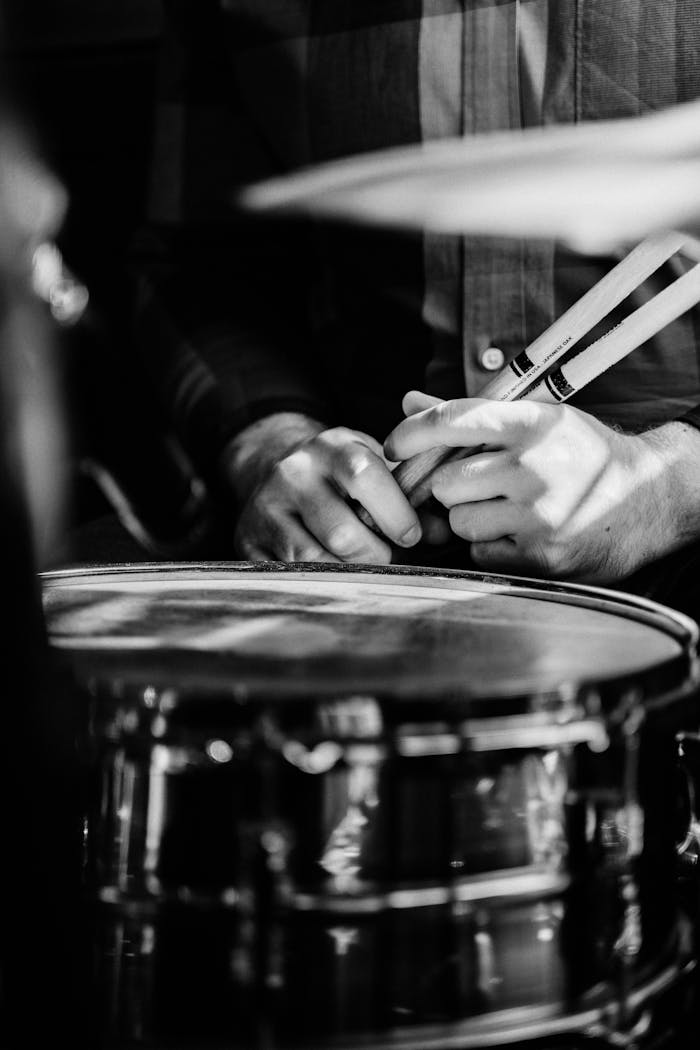
Why local patronage—not nostalgia—will decide its future
Recent conversations around town—sparked by a thoughtful piece from local writer Gary England and echoed in a discussion I had with a venue owner whose only goal is to bring live entertainment to his community—have raised a familiar, uncomfortable question: Is the live music scene in Las Vegas really dying?
After more than two decades of calling Las Vegas home, my answer is this: it’s complicated. In some ways, the scene is struggling. In others, it’s quietly surviving. What happens next depends largely on whether locals decide the music scene is worth supporting.
Big on Spectacle, Small in Reality
When I moved to Las Vegas from the East Coast 20 years ago, one thing became immediately clear: Vegas is not the sprawling metropolis it appears to be. The Strip creates an illusion of endless scale—resorts stacked back-to-back, tourists ferried from one spectacle to the next—but the city itself is relatively compact and geographically isolated.
Compare that to places like Florida’s I-4 corridor, where interconnected cities support a dense network of venues, musicians, and fans. There, local scenes overlap and reinforce one another. In Las Vegas, entertainment has always leaned heavily toward high-dollar, tourist-driven productions rather than grassroots, neighborhood-based culture.
That focus has consequences.
The Dual Reality of Las Vegas Entertainment
Las Vegas earns its title as the Entertainment Capital of the World. Legendary residencies—from Sinatra and Elvis to Celine Dion—built its reputation. Today, massive productions like Cirque du Soleil, Blue Man Group, and nonstop A-list tours fill arenas such as Allegiant Stadium, T-Mobile Arena, and MGM Grand Garden Arena more frequently than any other city in the world.
Mid-sized venues like House of Blues, Brooklyn Bowl, and Freemont Country Club provide important bridges between mega-shows and local stages.
But when people talk about a “dying” scene, they aren’t talking about stadiums. They’re talking about the neighborhood venues—the places that support cover bands, tribute acts, and local original artists trying to make a name for themselves. That’s where the strain is real.
The Economics No One Wants to Talk About
In most cities, live music survives on a simple formula: modest cover charges or advance ticket sales that help pay for the bands. Five or ten dollars at the door has long been the norm in the majority of markets I have been in. There are some exceptions to this rule in places like New Orleans and Nashville where there are streets lined with bars for the multitude of tourists who are there to drink and hop from bar to bar. Or the beach bars where a guy with his acoustic guitar and a backing track can entertain customers and tourists with a little “Cheeseburger in Paradise”. Both exceptions have a common theme…they are tourists destinations. But, outside of those tourist driven areas, cover charges and ticket sales still exist as the norm.
Las Vegas has a deeply ingrained culture of free entertainment. Casinos have spent decades offering lounge acts at no charge to keep people gambling and drinking. And there are casinos sprawled across the small city for tourists and locals. However, that mentality has spilled into the local music scene. Many local patrons actually resist paying cover charges—even small ones.
Independent local venues can’t survive on that logic.
A bar is a business with serious overhead: rent is higher in Vegas than most other cities not named New York, Los Angeles or Chicago (one off-Strip venue cited $16,000 a month for 6,000 square feet). Then there are utilities, insurance, maintenance, staffing, and licenses (just to scratch the surface). Live music adds additional expenses for sound systems, engineers, repairs, and legally required music licenses on top of those everyday operating costs.
Yes—licenses. Under U.S. copyright law, venues must obtain permission to publicly perform copyrighted music (Covers and Tributes). That permission comes through Performance Rights Organizations (PROs) like ASCAP, BMI, SESAC, and GMR. Most bars pay for a blanket license so bands can play freely—but those licenses typically cost between $300 and $1,200 per year.
Just to break even, a bar with a $16,000 rent (plus normal operating costs) must sell approximately 600 drinks every night just to break even. That is before factoring in paying bands and those additional costs for entertainment.
Without consistent cover charges or ticket revenue, more and more venues are being forced to either cut band pay—or shut their doors altogether.
The 2025 closure of Count’s Vamp’d, a beloved rock venue that operated for more than 16 years, is a painful example. High costs, shifting economics, proper bar and restaurant management knowledge as well as operational challenges eventually made survival impossible according to a recent interview with former owner Danny “The Count” Koker.
From the Bands’ Side of the Stage
Local musicians generally fall into three groups:
Cover bands, playing familiar hits by other artists
Tribute acts, recreating the illusion of iconic artists
Original artists, creates and performs new music in hopes that everyone else will eventually play in Cover bands
No matter which one you are in (many musicians are in multiple), bands face their own expenses—gear, rehearsal space, transportation, recording, promotion, merch, etc.. Yet pay has stagnated or declined.
Here’s a reality check: in 1992, minimum wage was $3.75 an hour. That same year, I was making $100 per night per musician playing in a five-piece cover band. That’s $500 paid to the band per night—33 years ago.
Today? Many bands are still lucky to get $500 for a night’s work. And before I get attacked in the comments from the “Online Keyboard Warriors” saying “I get paid more than that!” OK, a few are getting paid more and think it’s because you are the best in town and worth it. It’s OK rockstar, we all know how special and great and amazing you all are, get over it! I am talking about the average pay across the Vegas music scene, not you special ones with inside ties.
It’s not nostalgia—it’s math. Band pay has effectively seen zero growth, sometimes worse, while nearly everything else has tripled in cost. Minimum wage has risen roughly 300%. While bands continue to make the same or less than they did 33 years ago.
At the moment, Vegas seems especially drawn towards Tribute acts–what we used to call “Impersonators”. My only guess is Tributes tend to fare better as “sure draws” due to the lower cost than seeing the real thing, thus boosting attendance, which in turn boosts bar sales. The House of Blues in Mandalay Bay and my friends at Outlaw Entertainment seem to have found a great working model. They have been able to consistently pack the house by offering free tickets to tribute shows while charging premium on-strip prices ($25+) for drinks. Since it is on the strip, they are drawing in both locals and tourists using a model that once built Las Vegas, the “Vegas Free Show”! The venue is making money from high drink prices and volume, the bands are making money by drawing in the crowds, and the crowds are packing the joints. But this model can only work best on the strip where tourists can contribute to the venues bottom line though high-priced drink sales. Off the Strip, that approach rarely scales.
One of the most frequent criticisms directed at off-Strip, locally focused venues concerns drink pricing. Prices typically range from $3 to $15 per beverage—averaging around $10—depending largely on a venue’s proximity to the Strip or downtown tourist corridors. While these prices are often compared unfavorably to expectations for “local” establishments, they remain far below the $25-and-up drink prices commonly found at Strip resorts.
Even accounting for commercial rents that can be two to three times higher in Las Vegas, beverage pricing at off-Strip venues is largely in line with comparable live-music and local entertainment spaces in other major markets.
“I Don’t Pay for Drinks—I Gamble for Them”
I recently overheard someone at a bar say, “I don’t pay for drinks—I gamble for them.” That statement perfectly captures the Vegas mindset.
Here’s the reality: when you put $20 into a bar-top slot machine, you’ll usually play until you either win or lose that $20. If you lose, congratulations—you just bought yourself a $20 drink instead of a $10 one. If you win, it feels like a victory. But the math doesn’t lie. The average bar-top slot machine in Vegas pays out about 90%. That means the house keeps 10 cents of every dollar played. Over time, those “free” drinks cost roughly the same as paying for them outright.
Those machines aren’t there to make you rich—they’re there to keep the lights on. And if you enjoy live music in that venue, that math matters.
Why Local Patronage Matters Now
The local music scene in Vegas isn’t doomed—but it is fragile. And it won’t survive without local support.
Here are my personal observations regarding the current state of the local Las Vegas music scene.
In many cases, the audience at local shows is composed largely of other musicians and members of local bands—artists supporting one another on nights when they are not performing themselves. While friends and family do attend, the broader general public appears increasingly disengaged from live music at neighborhood bars and local venues. One contributing factor is the instability of these venues; many do not remain open long enough to cultivate a consistent, loyal customer base. Thus, making it difficult for the owners to consistently have the income to cover high rents and operating costs.
Compounding this challenge is the pervasive culture of free entertainment fostered by the casino-driven economy. That expectation that has spilled into the local market, leading even resident patrons to resist cover charges or ticketed events at independent venues that do not benefit from tourist-driven revenue. As a result, local music spaces face mounting difficulty sustaining both attendance and long-term viability.
With tourism dipping in 2025 (down 6-11% in some metrics due to costs and perceptions), and costs rising across the board, sustaining local culture matters more than ever.
Paying a $10 cover is less than a latte or a even a few spins on a slot machine. Tipping bands, buying their merch, and showing up to discover new music from original artists all make a difference. These venues and musicians aren’t faceless corporations—they’re neighbors taking real risks to create something meaningful.
If we want nights filled with live music, discovery, and community, we have to invest in them. Otherwise, more venues like Vamp’d will disappear, leaving only the high-priced mega-spectacles behind.
Las Vegas can have both.
But only if locals decide the music scene is worth showing up for.